Watercolor Decorative Camo Background for Design
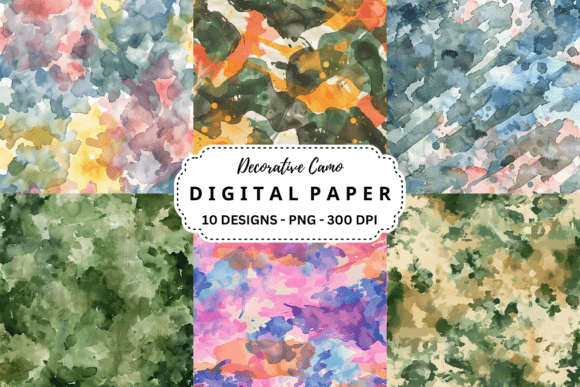
In the fast-paced world of visual content creation, finding assets that balance trendiness with versatility is often a challenge. Designers, marketers, and small business owners constantly search for textures that stand out without overwhelming the message. This is where a watercolor decorative camo background becomes an invaluable resource. Unlike traditional military-style camouflage, which relies on harsh lines and rigid geometric shapes, the watercolor variation introduces softness, fluidity, and an artistic touch to a classic pattern. It transforms a utilitarian concept into something elegant and modern, suitable for a wide array of projects ranging from high-end fashion lookbooks to playful social media stories.
The appeal of this specific style lies in its unique texture. When you work with high-quality files, specifically those rendered at 300 DPI with dimensions of 3600 x 3600 pixels, you are not just getting a pretty image; you are getting a professional-grade asset. These specifications ensure that whether you are printing a large format banner or designing a tiny icon for a mobile app, the edges remain crisp and the color gradients smooth. The "decorative" aspect implies a curated color palette—often featuring pastels, earth tones, or vibrant bursts of color—that moves away from the standard greens and browns of tactical gear. This makes the pattern adaptable for feminine branding, nursery decor, or trendy streetwear designs.
Why High-Resolution Matters for Professional Output
One of the most critical factors in digital design is resolution. Many free resources online offer low-resolution JPEGs that pixelate when stretched or lose quality when printed. Receiving a set of 10 individual PNG files at such a high resolution changes the workflow entirely. PNG format is particularly essential here because it supports transparency. This means you can overlay these camo patterns onto colored backgrounds, product mockups, or photographs without dealing with unsightly white boxes around the edges.
For print-on-demand entrepreneurs, this quality is non-negotiable. If you are creating wrapping paper, labels, or fabric prints, a 72 DPI web image will result in a blurry, unprofessional final product. However, with 300 DPI source files, you maintain control over the scale. You can tile the pattern seamlessly for wallpaper applications or isolate specific sections of the watercolor bleed to create unique focal points in a poster design. The sheer size of 3600 x 3600 pixels provides enough canvas space to manipulate the image in software like Photoshop or Illustrator without degrading the integrity of the watercolor strokes.
Versatile Applications Across Industries
The utility of a watercolor decorative camo background extends far beyond simple backdrops. Its organic nature allows it to fit into diverse sectors:
- Fashion and Apparel: The camo trend has cycled through fashion for decades, but the watercolor interpretation offers a fresh take. It is perfect for sublimation printing on leggings, t-shirts, and scarves. The soft edges mimic tie-dye effects while maintaining the recognizable structure of camouflage, appealing to consumers who want edge without aggression.
- Social Media and Digital Marketing: In an era where scroll-stopping visuals are currency, these backgrounds provide excellent templates for Instagram stories, Pinterest pins, and Facebook ads. They add texture to text-heavy graphics, making quotes or promotional announcements pop without distracting from the copy.
- Packaging and Branding: Small businesses selling handmade soaps, candles, or artisanal foods can use these patterns for label design. The artistic flair suggests a boutique, handcrafted quality that resonates with modern consumers looking for authenticity.
- Event Stationery: From baby showers to birthday parties, invitations benefit from unique textures. A soft pink or blue watercolor camo can serve as a gender-neutral or thematic element that feels more sophisticated than standard polka dots or stripes.
- Scrapbooking and Paper Crafts: For hobbyists, having high-res digital papers allows for infinite printing possibilities. Whether used in physical scrapbooks or digital planners, the variety within a 10-file pack ensures no two pages look exactly alike.
Enhancing Brand Identity Through Texture
Branding is about consistency and recognition. Using a distinct texture like watercolor camo can become part of a brand's visual language. When used consistently across business cards, website headers, and packaging, it creates a cohesive aesthetic. The "decorative" element allows brands to align the pattern with their specific color psychology. For instance, a wellness brand might choose sage greens and soft creams to evoke calmness, while a youth-oriented streetwear label might opt for neon splashes against a dark background to signal energy and rebellion.
Furthermore, the organic imperfections of watercolor—the way the pigment pools and bleeds—add a human element to digital designs. In a marketplace saturated with vector graphics and AI-generated perfection, these subtle irregularities communicate craftsmanship. They suggest that there was a human hand involved in the creative process, which can significantly boost consumer trust and engagement.
Practical Considerations for Implementation
While the assets are high quality, how you implement them determines the final success of your project. When working with watercolor decorative camo backgrounds, consider the contrast between the pattern and your foreground elements. Because watercolor can have varying levels of opacity, ensure that text placed over these backgrounds remains legible. You may need to add a semi-transparent overlay or a text box if the pattern is too busy in certain areas.
Additionally, take advantage of the fact that you receive 10 individual files. Do not feel compelled to use them all in one project. Instead, treat them as a library. Use one for a summer campaign and another for a holiday promotion. Mixing and matching these textures with solid colors or photography can create a dynamic visual system that keeps your audience engaged over time. For web designers, remember to optimize these large PNG files for web use by compressing them appropriately without losing visible quality, ensuring fast load times while retaining the crisp details on retina displays.
Ultimately, investing in premium design assets saves time and elevates the perceived value of your work. Rather than spending hours trying to recreate a realistic watercolor effect digitally, starting with a professionally crafted base allows you to focus on layout, typography, and strategy. Whether you are a freelancer pitching to a new client or a business owner refreshing your product line, the flexibility and quality of these backgrounds provide a solid foundation for creative success.